There's a picture of a billboard I keep coming back to. It says: "Your first anything will be bad. But you can't make your 100th without making your first. So put your ego aside, and start."
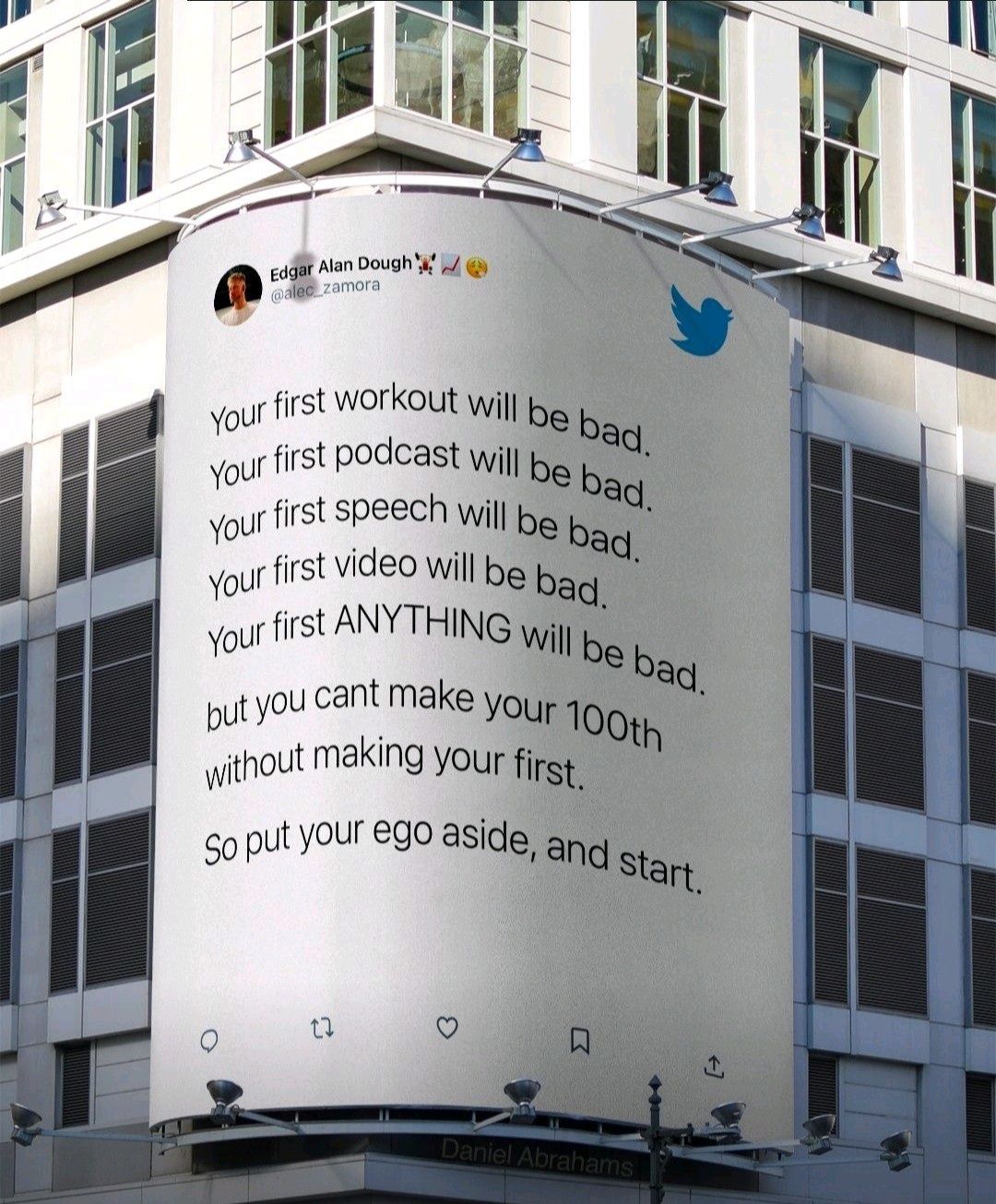
I am a perfectionist. I don't feel ready to write this, and I know my skills as a writer aren't exactly where I want them to be yet. But I want to be able to write things in an engaging way. If I wait until I'm "ready," I'll never ship anything. So, I am putting my ego aside.
Why start a blog? Especially when the overwhelming majority of blogs don't get read by anyone?
Fundamentally, I look at it as an asymmetric bet.
The costs are practically zero. I'm a software engineer, so hosting this myself on an AWS S3 bucket brings some interesting technical challenges, but it also means I'm not at the whims of arbitrary account deletions or platforms trying to extract more money out of me. The downside is just my time. In the absolute worst-case scenario, no one reads this, and I've just trained AI on my thought processes so it can better target ads towards me.
But the upside? The upside is massive leverage.
If you write something once, anyone with an internet connection and a device can read it. That is a massively powerful concept. But to get to the point where you actually have something worth reading, you have to upgrade your own brain first.
To write is to think. Trying to express complicated ideas forces you to pull them out of your head and wrestle with them until you can articulate them clearly.
"Writing is thinking. To write well is to think clearly. That's why it's so hard." - David McCullough
Somewhat ironically, writing this very post was a demonstration of the process. I had some vague reasons why I wanted to start a blog. I wrote them down. I did some research. I revised my thoughts. I grappled with it. Along the way I came across Shane Parrish's Writing to Think, which is full of quotes that put this better than I can:
Mortimer Adler put it well: "The person who says he knows what he thinks but cannot express it usually does not know what he thinks."
"A good writer doesn't just think, and then write down what he thought, as a sort of transcript. A good writer will almost always discover new things in the process of writing." - Paul Graham
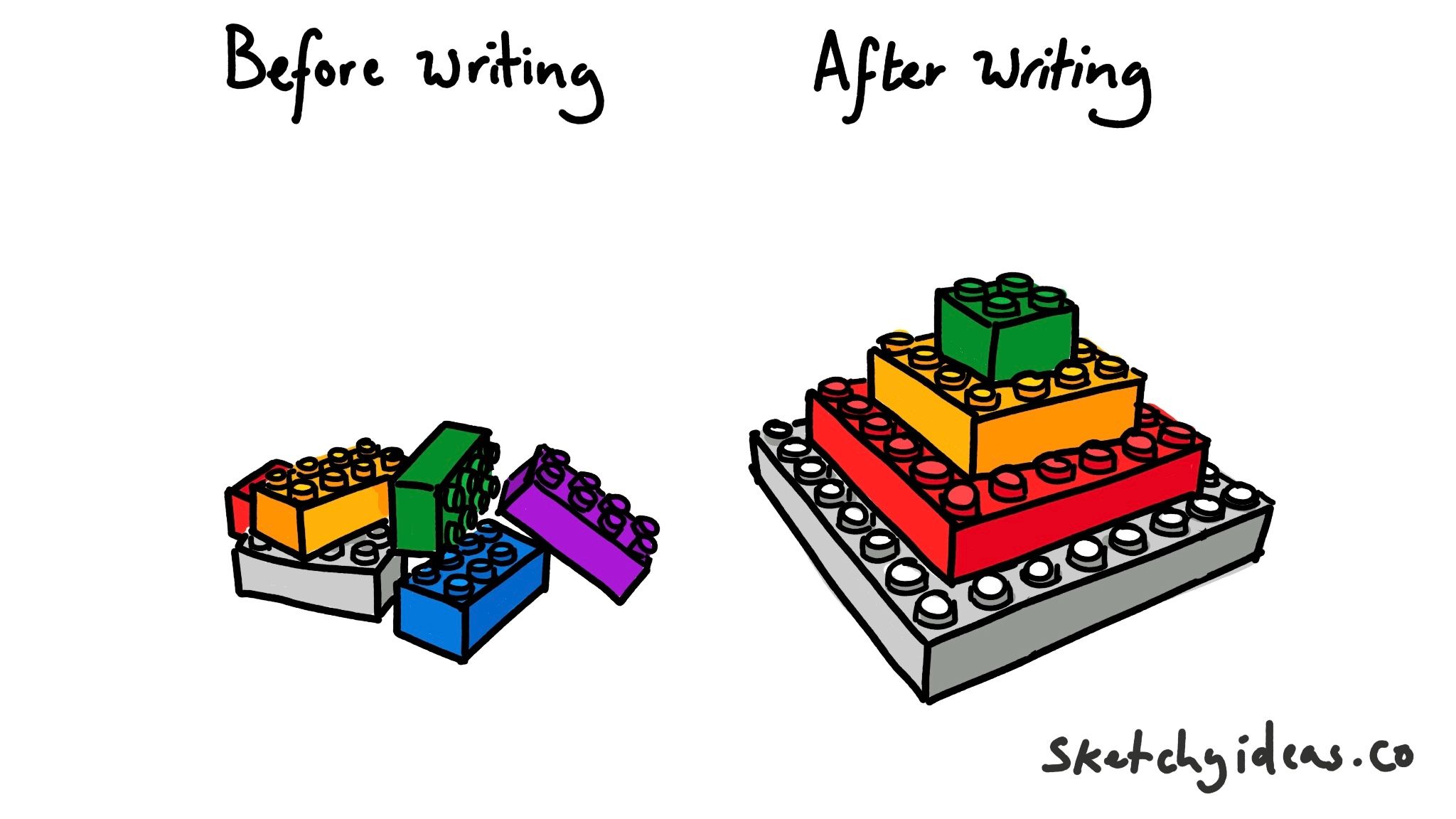
I am the sort of person who likes to think a lot. This blog won't solve my overthinking, but it will change the target. I think it's much healthier to ruminate on ideas that could be shared publicly, ideas that could inspire, teach, or add value, rather than wasting brain cycles on the trifles and quibbles of daily life.
Plus, writing publicly forces accountability. Why would you want to go around with half-verified facts in your head? That doesn't seem like a good idea. Knowing someone might read this forces me to do a bit of analysis, rather than just firing off half-brained ideas. Better yet, if I write (and by extension think) something which is wrong, or could be seen from another angle, someone might actually call me out on it, and I will be able to learn.
Which brings me to the elephant in the room: the audience.
Is it okay to want people to read it? Honestly, yes. I think of it almost like a business. You produce things of value, and people pay you with their attention. It's a great way to learn what the world actually finds valuable.
But trying to get an audience right now feels like putting the cart before the horse. You can't market something if it isn't actually good.
Right now, the baker just needs to go and bake some bread. You just have to make the damn recipe. I don't know how I'm going to sell the bread if half the time it's coming out burnt or not crispy enough.
So, that is what this blog is. It's me practicing. It's me building the muscle so that when something of immense, world-class value comes along, I will be able to do it justice.
I'm not going to let perfect be the enemy of good. For the next little while, my goal is just to write things that seem "good enough" and hit ship.
Consider this my first burnt loaf.